The Ultimate Guide to Rich Homemade Stocks & Bone Broths
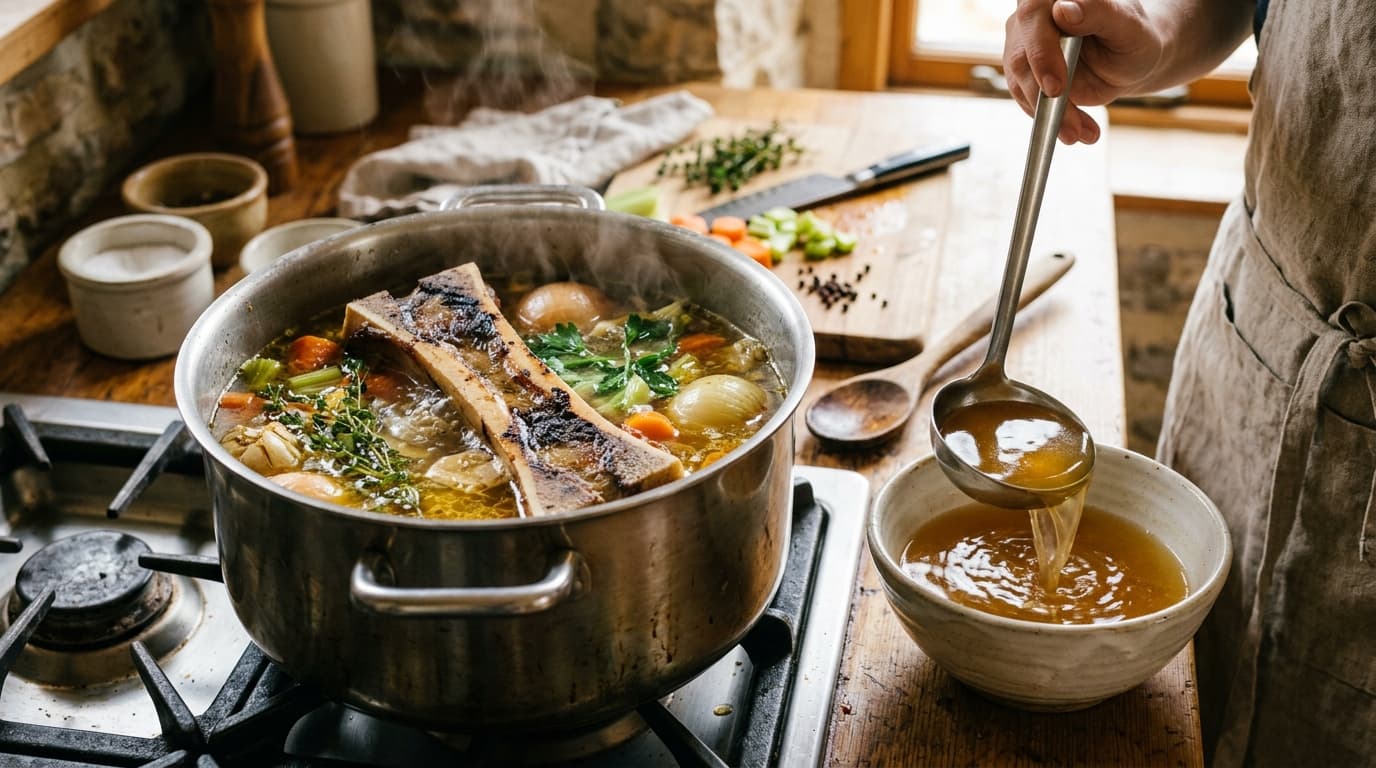
1. The Culinary Spine of Great Cooking
In classic culinary arts, stock is called 'le fond' — literally 'the foundation'. Without rich, collagen-dense homemade stock, classic pan sauces like demi-glace, rich stews, and comforting risottos lack body and velvety mouthfeel. Commercial bouillon cubes and cartons are virtually void of gelatin, relying instead on hydrolyzed yeast protein, sodium, and palm oils.
True bone broth, simmered slowly over many hours, transforms hard connective tissues and cartilage into gelatin and pure amino acids, producing a golden elixir that jiggles like jelly when chilled in the refrigerator.
A chef's skill can always be judged by the quality of their stock. When made with care, it lends an unmistakable luxurious silkiness to every dish it touches.
2. Anatomy of the Bone: Choosing the Right Blend
To achieve both deep caramelized flavor and exceptional gelatin density, you need a strategic ratio of bone types:
- Gelatin-Rich Joint Bones (50%): Knuckle bones, feet (trotters or chicken feet), neck bones, and veal shanks. Packed with collagen that melts into gelatin.
- Flavor & Meat Bones (30%): Meaty beef shanks, short ribs, oxtail, or roasted chicken wings/backs. These provide deep glutamates and savory notes.
- Marrow Bones (20%): Center-cut pipe bones. They infuse the broth with luxurious lipid richness and sweet roasted marrow essence.
3. The Roasting and Tomato Fond Phase
For a dark, rich beef or veal stock (Fond Brun), never place raw bones directly in water. Spread bones across heavy baking sheets and roast at 220°C (425°F) for 45 to 50 minutes until deeply browned.
In the final 15 minutes of roasting, brush the bones with 2 tablespoons of double-concentrated tomato paste. The sugars in the paste caramelize alongside the bone fats, creating a deeply savory roasted base and rich mahogany color.
4. The Gentle Simmer Protocol
Transfer roasted bones to a tall stockpot. Pour 1 cup of hot water onto the roasting pan, scrape up the browned bits (fond) with a wooden spoon, and pour everything into the pot. Cover with cold filtered water 5 cm above the bones.
- Start Cold: Starting with cold water allows soluble proteins to dissolve and rise gradually to the surface.
- Skim the Scum: As the pot comes to a gentle simmer, greyish foam and impurities will rise. Skim meticulously with a ladle during the first 45 minutes.
- The 'Lazy Bubble' Heat: Lower heat to maintain a temperature between 85°C and 90°C (185°F-195°F). You should see only one or two lazy bubbles breaking the surface per second. Boiling violently will emulsify fats and turn the stock cloudy and greasy.
- Cook Times: 12 to 24 hours for beef and veal; 6 to 8 hours for chicken and poultry.
5. Timing Vegetables and Aromatics (Mirepoix)
Do not add vegetables at the beginning. Simmering onions and carrots for 24 hours breaks them down into mush that releases bitter, oxidized flavors and clouds the broth. Add your mirepoix (2 onions with skins for color, 3 carrots, 3 celery ribs, black peppercorns, fresh thyme, and bay leaves) only in the final 2 to 3 hours of cooking.
6. Straining, Defatting, and Storing Liquid Gold
Strain through a fine-mesh colander lined with cheesecloth into a large bowl. Never press down on the bones or vegetables, as this pushes sediment into the clear broth. Chill quickly in an ice bath before refrigerating.
Once fully chilled overnight, the fat will solidify into a firm white cap on top. Lift it off with a spoon. Underneath, you will find glistening, crystal-clear, bouncy gelatin broth. Freeze in 1-cup portions or silicone ice cube trays for instant cooking sauces.
Professional Chef Secrets & Pro Tips
Elevating your culinary skills from a standard home cook to an instinctual chef requires understanding not just what recipes say, but why ingredients behave the way they do. Professional kitchens operate on efficiency, mise en place, and sensory awareness. Always taste your food at every stage of cooking, adjust seasoning gradually, and pay attention to auditory cues — like the sound of sizzling or the gentle bubbling of a simmer.
- Mise en Place: Chop, measure, and organize all ingredients in small bowls before turning on the heat. This prevents burning and frantic mistakes.
- Salt Management: Salt ingredients in layers rather than solely at the end. Salt draws moisture, enhances sweetness, and penetrates deeply into proteins.
- Temperature Control: Preheat your pans and ovens properly. Adding cold ingredients to a lukewarm pan causes sticking and steamed, soggy food rather than crisp golden browning.
- Acid Balance: When a dish tastes flat despite having enough salt, it usually lacks acid. A splash of lemon juice, sherry vinegar, or white wine instantly brightens heavy flavors.
Common Mistakes to Avoid & Troubleshooting
Even experienced cooks occasionally run into hurdles. Here are the most frequent pitfalls and how to easily remedy them in your own kitchen:
- Overcrowding the Pan: Trapping steam between food items prevents the Maillard reaction. Cook in batches if necessary to keep high heat circulating.
- Rushing the Rest Period: Cutting into roasted meat or baked breads immediately after cooking causes all trapped juices and steam to pour out, resulting in dry texture.
- Using Dull Blades: A dull knife requires excessive force and is significantly more dangerous than a razor-sharp blade that glides effortlessly through ingredients.
- Neglecting Residual Heat: Food continues to cook for 3-5 minutes after leaving the pan. Remove delicate items like eggs or fish just slightly before desired doneness.
Frequently Asked Questions (FAQ)
Q: How do I store leftovers without sacrificing texture? A: Cool food completely to room temperature before covering. Trapped condensation inside warm containers makes crispy skins soggy and accelerates spoilage.
Q: What is the best way to develop an intuitive palate? A: Taste components raw, during cooking, and after resting. Keep a small spice tasting notebook and experiment with one new herb or spice each week.