The Master Guide to Fresh Handmade Pasta: Doughs, Shapes, and Fillings
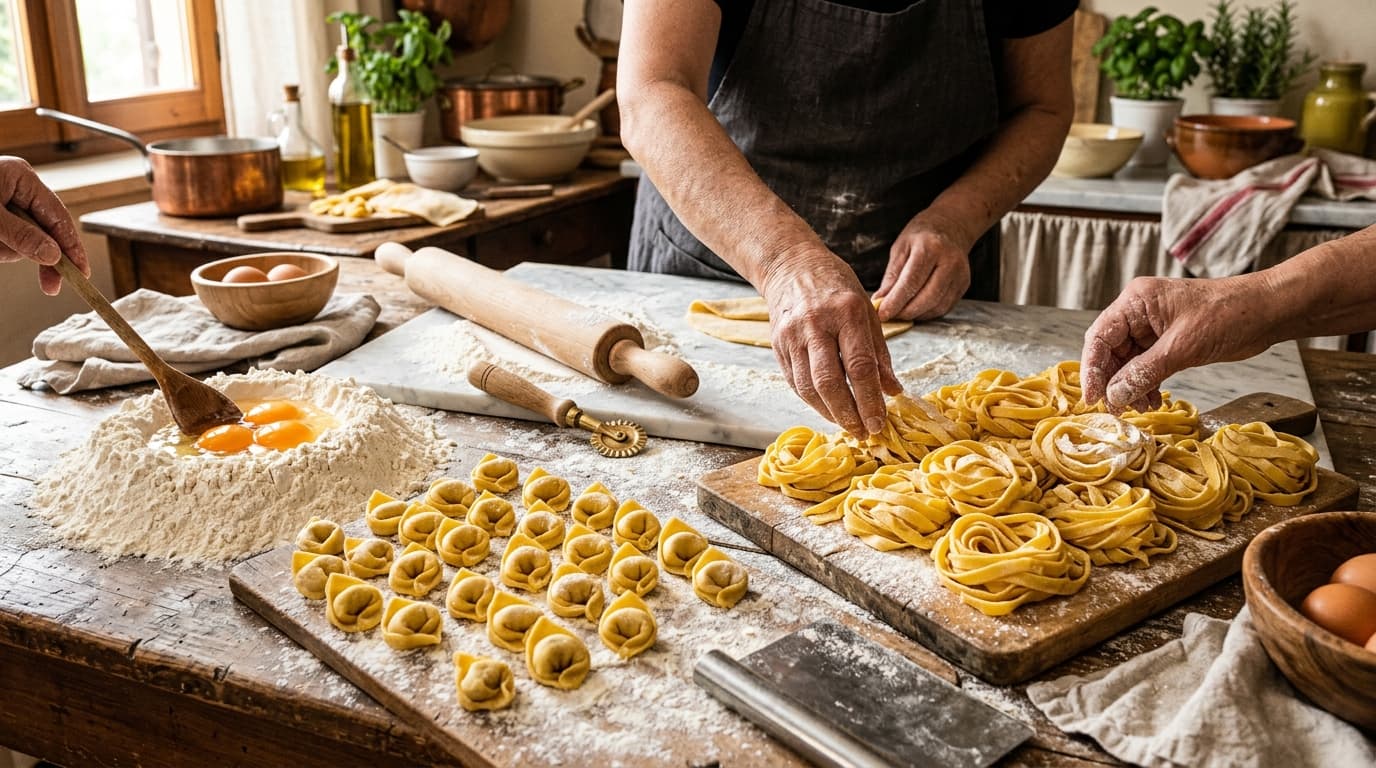
The Transformative Magic of Fresh Pasta
Once you taste fresh egg pasta made from scratch, dried boxed pasta becomes a distant memory. Silky, tender yet retaining a delicate chew, fresh pasta absorbs sauces and coatings like a sponge, transforming humble dinners into five-star Italian feasts.
The Golden Ratio: Flour & Egg Chemistry
The timeless Italian standard is simple: 100 grams of Tipo 00 soft wheat flour per 1 large egg (approx. 55-60g) per serving. Tipo 00 flour is ground so finely that it yields an ultra-smooth, crack-free sheet of dough. For richer pasta, substitute one whole egg with two egg yolks.
The Art of Kneading & Resting
Pour flour onto a wooden board, create a wide central well, crack eggs inside, and whisk with a fork before incorporating flour. Knead firmly with the heel of your hand for 10 full minutes until smooth as a baby's cheek. Wrap in plastic and rest for 30-45 minutes — this allows gluten strands to relax so the dough rolls without snapping back.
Rolling Paper-Thin Sheets (Sfoglia)
Using a pasta machine or heavy mattarello rolling pin, roll the dough progressively thinner, dusting with semolina flour to prevent sticking. Aim for a thickness where you can see the shadow of your fingers through the dough sheet.
Classic Shapes: Tagliatelle, Pappardelle, and Ravioli
Flour the sheet generously, roll it loosely like a scroll, and slice with a sharp chef's knife into 6mm ribbons for Tagliatelle or 2cm wide strips for Pappardelle. For Ravioli, dollop ricotta and herb filling, press out all air pockets around the edges, and seal with a fluted pastry wheel.
The 2-Minute Boil Rule
Fresh pasta cooks in just 90 to 120 seconds in heavily salted boiling water. Transfer immediately with tongs into your waiting emulsion of pasta water, butter, and Parmigiano-Reggiano.
Professional Chef Secrets & Pro Tips
Elevating your culinary skills from a standard home cook to an instinctual chef requires understanding not just what recipes say, but why ingredients behave the way they do. Professional kitchens operate on efficiency, mise en place, and sensory awareness. Always taste your food at every stage of cooking, adjust seasoning gradually, and pay attention to auditory cues — like the sound of sizzling or the gentle bubbling of a simmer.
- Mise en Place: Chop, measure, and organize all ingredients in small bowls before turning on the heat. This prevents burning and frantic mistakes.
- Salt Management: Salt ingredients in layers rather than solely at the end. Salt draws moisture, enhances sweetness, and penetrates deeply into proteins.
- Temperature Control: Preheat your pans and ovens properly. Adding cold ingredients to a lukewarm pan causes sticking and steamed, soggy food rather than crisp golden browning.
- Acid Balance: When a dish tastes flat despite having enough salt, it usually lacks acid. A splash of lemon juice, sherry vinegar, or white wine instantly brightens heavy flavors.
Common Mistakes to Avoid & Troubleshooting
Even experienced cooks occasionally run into hurdles. Here are the most frequent pitfalls and how to easily remedy them in your own kitchen:
- Overcrowding the Pan: Trapping steam between food items prevents the Maillard reaction. Cook in batches if necessary to keep high heat circulating.
- Rushing the Rest Period: Cutting into roasted meat or baked breads immediately after cooking causes all trapped juices and steam to pour out, resulting in dry texture.
- Using Dull Blades: A dull knife requires excessive force and is significantly more dangerous than a razor-sharp blade that glides effortlessly through ingredients.
- Neglecting Residual Heat: Food continues to cook for 3-5 minutes after leaving the pan. Remove delicate items like eggs or fish just slightly before desired doneness.
Frequently Asked Questions (FAQ)
Q: How do I store leftovers without sacrificing texture? A: Cool food completely to room temperature before covering. Trapped condensation inside warm containers makes crispy skins soggy and accelerates spoilage.
Q: What is the best way to develop an intuitive palate? A: Taste components raw, during cooking, and after resting. Keep a small spice tasting notebook and experiment with one new herb or spice each week.