Mastering Basic & Advanced Knife Skills
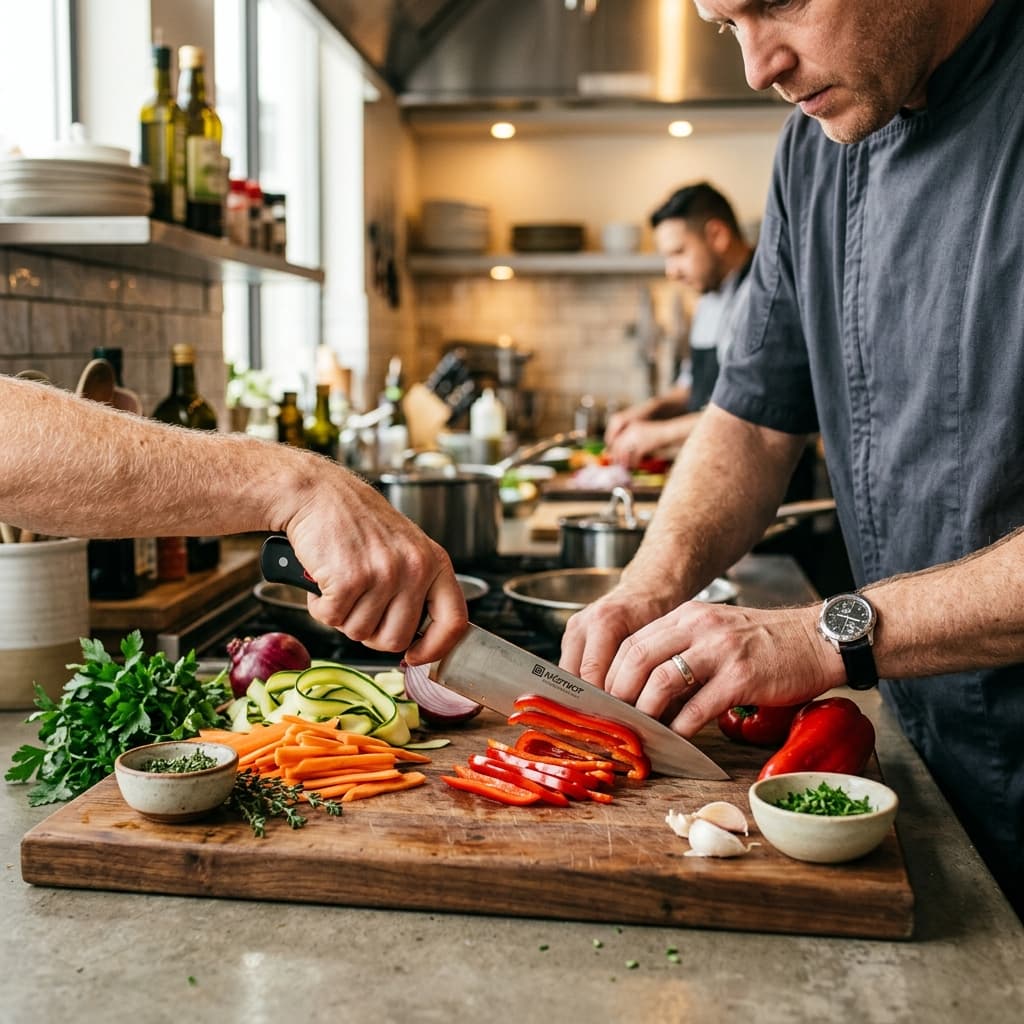
The Claw Grip
The most important technique to learn is the 'claw grip'. Curl the fingers of your non-dominant hand inward like a claw and use your knuckles to guide the knife blade. This protects your fingertips from being cut.
The Rocking Motion
Keep the tip of your chef's knife on the cutting board and lift the handle to create a rocking motion. This is the most efficient and safe way to chop herbs and smaller vegetables.
The Pinch Grip
For maximum control, use the 'pinch grip'. Choke up on the handle so that your thumb and index finger are actually gripping the base of the blade. The remaining three fingers wrap around the handle.
How to Dice an Onion
Cut off the stem, leave the root intact. Halve the onion through the root and peel. Make vertical cuts towards the root (but not through it), then horizontal cuts, and finally slice across to create perfect cubes.
Mincing Garlic Safely
Smash the clove with the flat side of your knife to loosen the skin. Remove skin, then use the rocking motion to finely mince. Adding a pinch of salt can help keep the garlic from sticking to your knife.
Julienne & Batonnet
Julienne involves cutting vegetables into long, thin matchstick-sized pieces (usually 2mm x 2mm x 5cm). Batonnet is slightly larger (6mm x 6mm x 5-6cm). Both are essential for stir-frys and salads.
Chiffonade Technique
To create long, thin ribbons of leafy herbs like basil or spinach, stack the leaves, roll them tightly like a cigar, and then slice across the roll.
Brunoise: The Fine Dice
Starting from a julienne, turn the matchsticks 90 degrees and cut them into tiny 2mm cubes. This technique is often used for garnishes and delicate sauces.
Knife Care & Maintenance
Always hand wash your knives; dishwashers can dull the blades and damage handles. Use a honing steel regularly to keep the edge straight, and have them professionally sharpened once or twice a year.
Professional Chef Secrets & Pro Tips
Elevating your culinary skills from a standard home cook to an instinctual chef requires understanding not just what recipes say, but why ingredients behave the way they do. Professional kitchens operate on efficiency, mise en place, and sensory awareness. Always taste your food at every stage of cooking, adjust seasoning gradually, and pay attention to auditory cues — like the sound of sizzling or the gentle bubbling of a simmer.
- Mise en Place: Chop, measure, and organize all ingredients in small bowls before turning on the heat. This prevents burning and frantic mistakes.
- Salt Management: Salt ingredients in layers rather than solely at the end. Salt draws moisture, enhances sweetness, and penetrates deeply into proteins.
- Temperature Control: Preheat your pans and ovens properly. Adding cold ingredients to a lukewarm pan causes sticking and steamed, soggy food rather than crisp golden browning.
- Acid Balance: When a dish tastes flat despite having enough salt, it usually lacks acid. A splash of lemon juice, sherry vinegar, or white wine instantly brightens heavy flavors.
Common Mistakes to Avoid & Troubleshooting
Even experienced cooks occasionally run into hurdles. Here are the most frequent pitfalls and how to easily remedy them in your own kitchen:
- Overcrowding the Pan: Trapping steam between food items prevents the Maillard reaction. Cook in batches if necessary to keep high heat circulating.
- Rushing the Rest Period: Cutting into roasted meat or baked breads immediately after cooking causes all trapped juices and steam to pour out, resulting in dry texture.
- Using Dull Blades: A dull knife requires excessive force and is significantly more dangerous than a razor-sharp blade that glides effortlessly through ingredients.
- Neglecting Residual Heat: Food continues to cook for 3-5 minutes after leaving the pan. Remove delicate items like eggs or fish just slightly before desired doneness.
Frequently Asked Questions (FAQ)
Q: How do I store leftovers without sacrificing texture? A: Cool food completely to room temperature before covering. Trapped condensation inside warm containers makes crispy skins soggy and accelerates spoilage.
Q: What is the best way to develop an intuitive palate? A: Taste components raw, during cooking, and after resting. Keep a small spice tasting notebook and experiment with one new herb or spice each week.