The Ultimate Japanese Matcha Masterclass: From Leaf to Froth
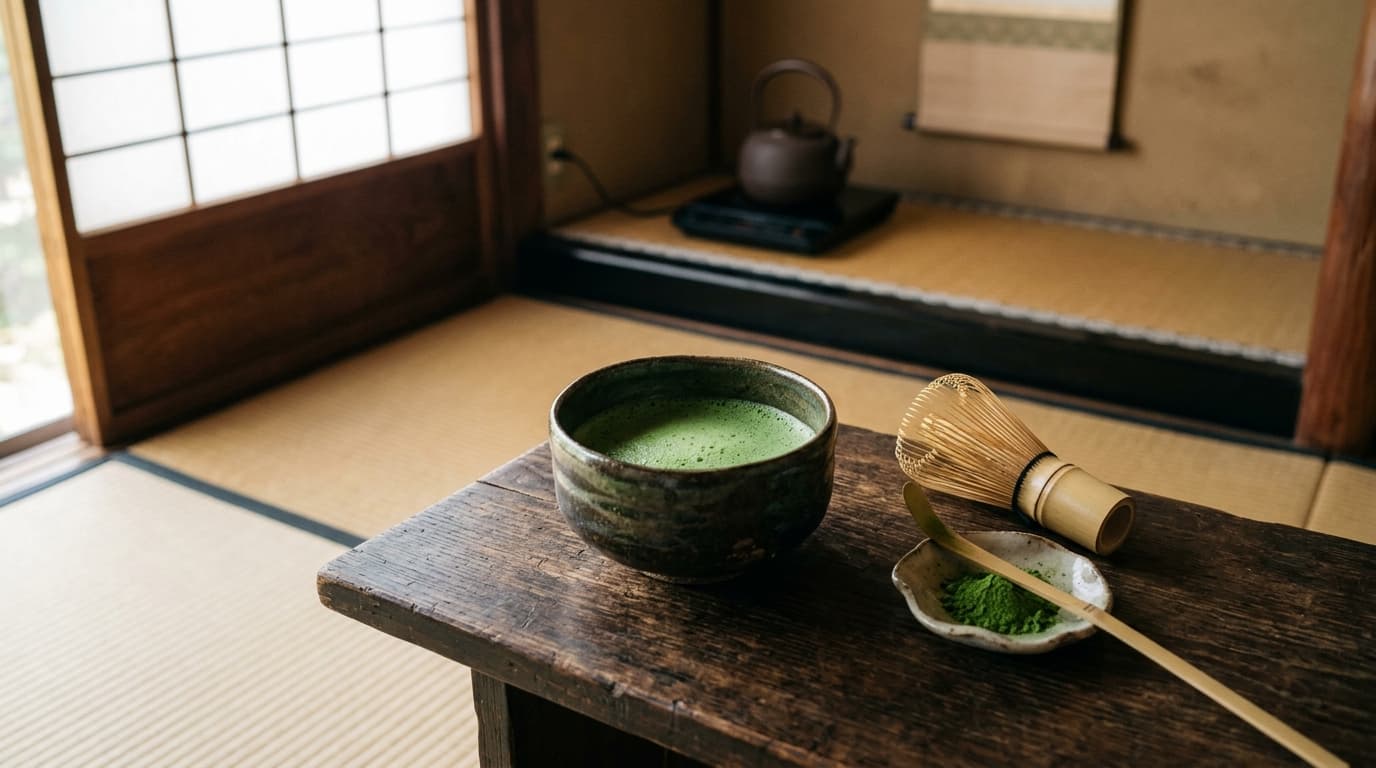
The Green Wonder of Uji and Shizuoka
Unlike steeped green tea where leaves are discarded, drinking matcha means consuming the whole powdered tea leaf. Shaded from sunlight for 3 to 4 weeks before harvest (a process that spikes chlorophyll and L-theanine amino acids), matcha produces calm, sustained alertness without coffee jitters.
Ceremonial Grade vs. Culinary Grade
Ceremonial grade is made exclusively from the first harvest's youngest, most tender top leaves, stone-ground into a vibrant electric-green powder with zero bitterness and natural umami sweetness. Culinary grade comes from later harvests and has a bolder, more astringent flavor suited for baking.
The Critical 80°C (176°F) Water Rule
Boiling water (100°C) is matcha's worst enemy — it scorches the delicate amino acids and releases overwhelming bitterness. Always use pure filtered water heated to exactly 75°C-80°C (167°F-176°F) to preserve sweet grassy notes.
The 'W' Motion Whisking Technique
Sift 2 bamboo scoops (approx. 2g) of matcha through a fine mesh into your warm Chawan bowl to eliminate clumps. Add 60ml of hot water. Using a bamboo Chasen whisk, whisk rapidly from the wrist in a vigorous 'W' or 'M' shape — never in circles — until a dense microfoam with micro-bubbles blankets the surface.
Crafting the Perfect Layered Iced Matcha Latte
Fill a glass with ice and your choice of milk (oat milk pairs exquisitely with matcha). Sweeten with pure vanilla syrup or maple. Slowly pour your freshly whisked, concentrated matcha over the top ice cubes to create a stunning two-toned green-and-white gradient.
Professional Chef Secrets & Pro Tips
Elevating your culinary skills from a standard home cook to an instinctual chef requires understanding not just what recipes say, but why ingredients behave the way they do. Professional kitchens operate on efficiency, mise en place, and sensory awareness. Always taste your food at every stage of cooking, adjust seasoning gradually, and pay attention to auditory cues — like the sound of sizzling or the gentle bubbling of a simmer.
- Mise en Place: Chop, measure, and organize all ingredients in small bowls before turning on the heat. This prevents burning and frantic mistakes.
- Salt Management: Salt ingredients in layers rather than solely at the end. Salt draws moisture, enhances sweetness, and penetrates deeply into proteins.
- Temperature Control: Preheat your pans and ovens properly. Adding cold ingredients to a lukewarm pan causes sticking and steamed, soggy food rather than crisp golden browning.
- Acid Balance: When a dish tastes flat despite having enough salt, it usually lacks acid. A splash of lemon juice, sherry vinegar, or white wine instantly brightens heavy flavors.
Common Mistakes to Avoid & Troubleshooting
Even experienced cooks occasionally run into hurdles. Here are the most frequent pitfalls and how to easily remedy them in your own kitchen:
- Overcrowding the Pan: Trapping steam between food items prevents the Maillard reaction. Cook in batches if necessary to keep high heat circulating.
- Rushing the Rest Period: Cutting into roasted meat or baked breads immediately after cooking causes all trapped juices and steam to pour out, resulting in dry texture.
- Using Dull Blades: A dull knife requires excessive force and is significantly more dangerous than a razor-sharp blade that glides effortlessly through ingredients.
- Neglecting Residual Heat: Food continues to cook for 3-5 minutes after leaving the pan. Remove delicate items like eggs or fish just slightly before desired doneness.
Frequently Asked Questions (FAQ)
Q: How do I store leftovers without sacrificing texture? A: Cool food completely to room temperature before covering. Trapped condensation inside warm containers makes crispy skins soggy and accelerates spoilage.
Q: What is the best way to develop an intuitive palate? A: Taste components raw, during cooking, and after resting. Keep a small spice tasting notebook and experiment with one new herb or spice each week.